Specialized · Transfer machine · KAS Group
IROCUBEMS60L
One part to a transfer machine every 4.22 seconds.
- Cycle time
- 4.22 s
- Vision
- ~83 ms per image
- Robot
- Stäubli TX2-60L
- Mounting
- Inverted, above the machine
- Footprint
- 900 × 2,000 mm
- Conveyor
- 600 × 2,000 mm
1 / 8
Overview
Brass valve parts, straight into the transfer machine
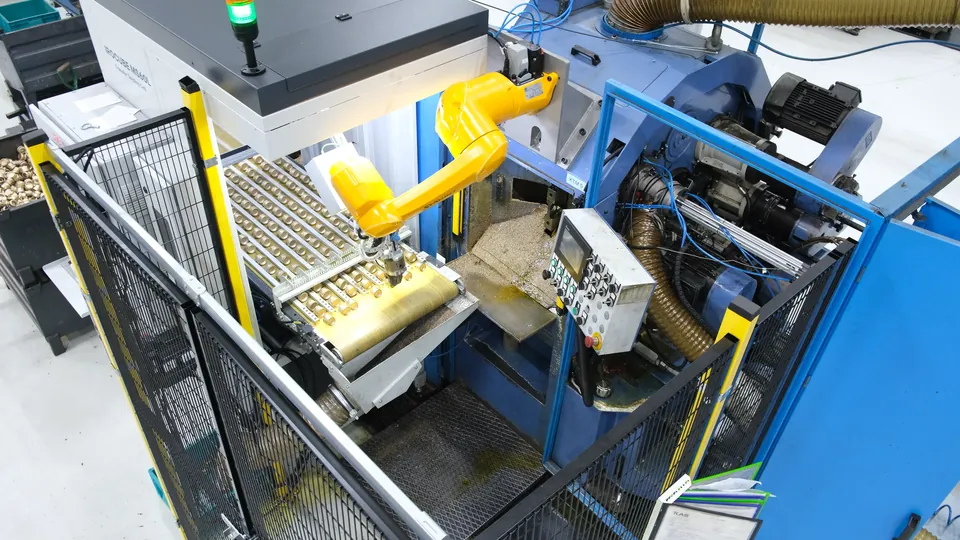
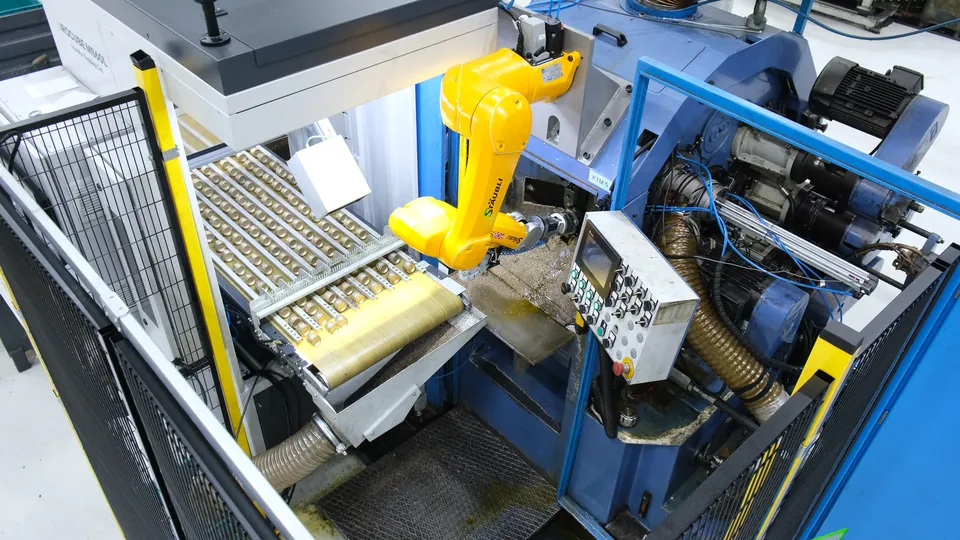
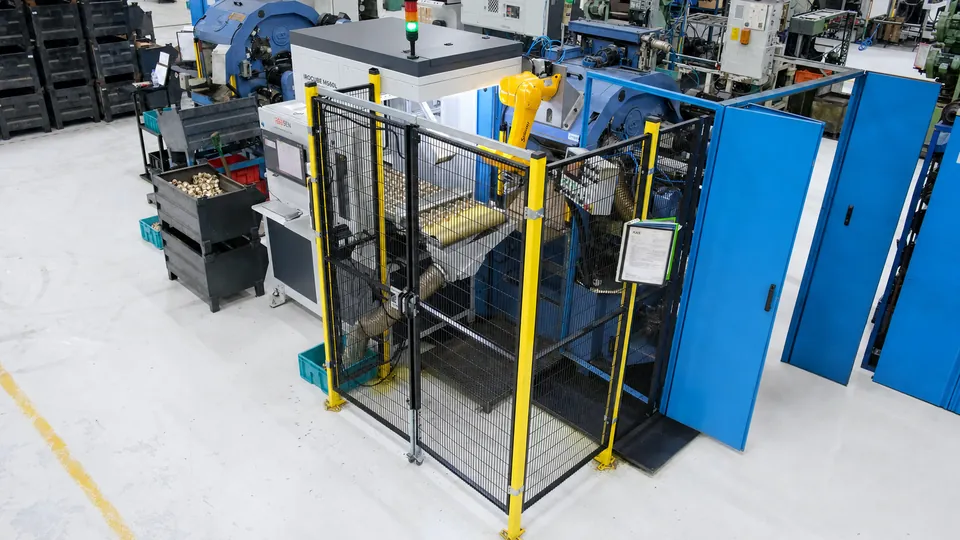
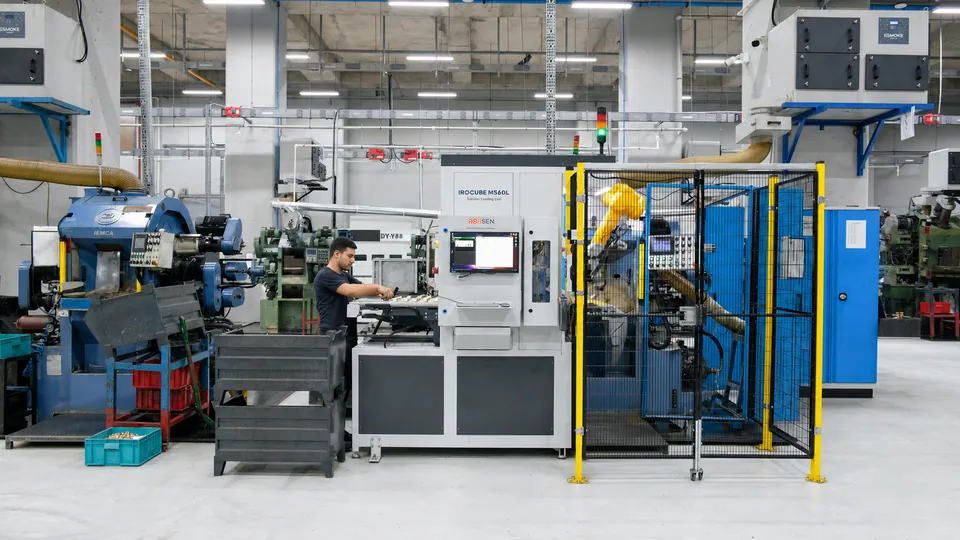
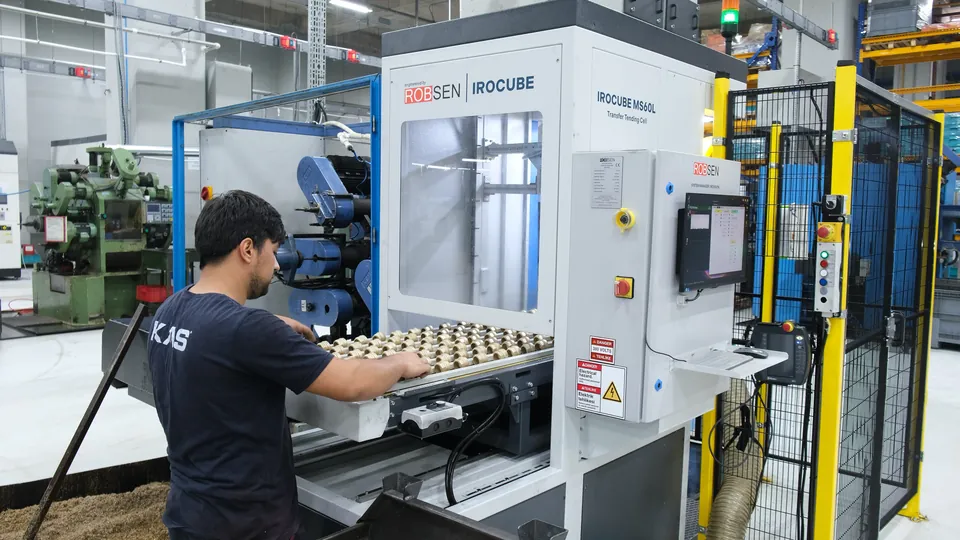
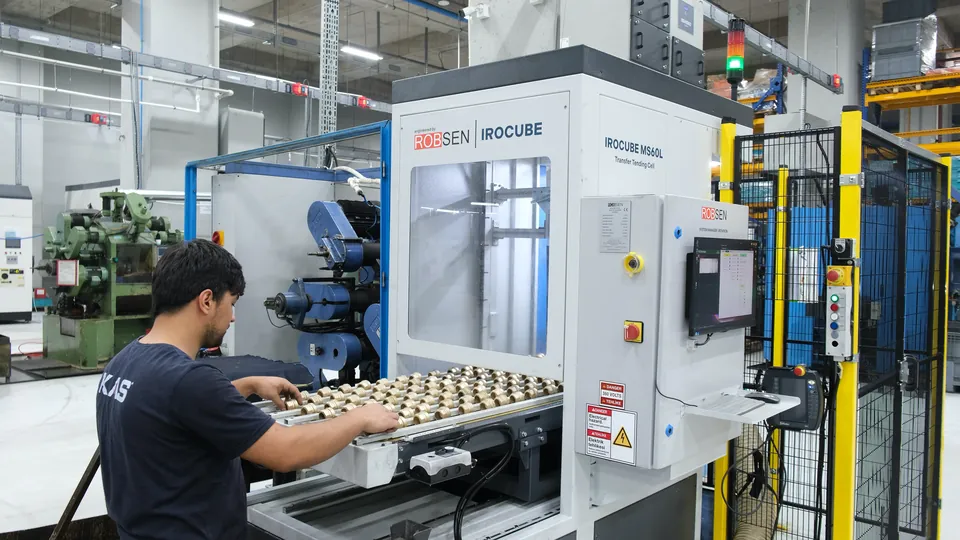
At KAS Group, the MS60L takes raw brass parts from a backlit conveyor and loads them into a transfer machine. IROVISION locates each part in about 83 milliseconds, so the robot never waits for the camera.
Footprint of this installation. Each specialized cell is sized to its machine; send us yours for a layout.
| Specification | Value |
|---|---|
| Machine | Transfer machine |
| Parts | Brass valve parts |
| Cycle time | 4.22 s |
| Robot | Stäubli TX2-60L |
| Robot mounting | Inverted, above the machine |
| Feeding | Backlit conveyor |
| Conveyor | 600 × 2,000 mm |
| Vision | IROVISION |
| Cell size (W × D × H) | 900 × 2,000 × 2,340 mm |
| Footprint (W × D) | 900 × 2,000 mm |
One part, three steps
Find it, check it, load it
Every 4.22 seconds, one brass part goes from the conveyor into the transfer machine.
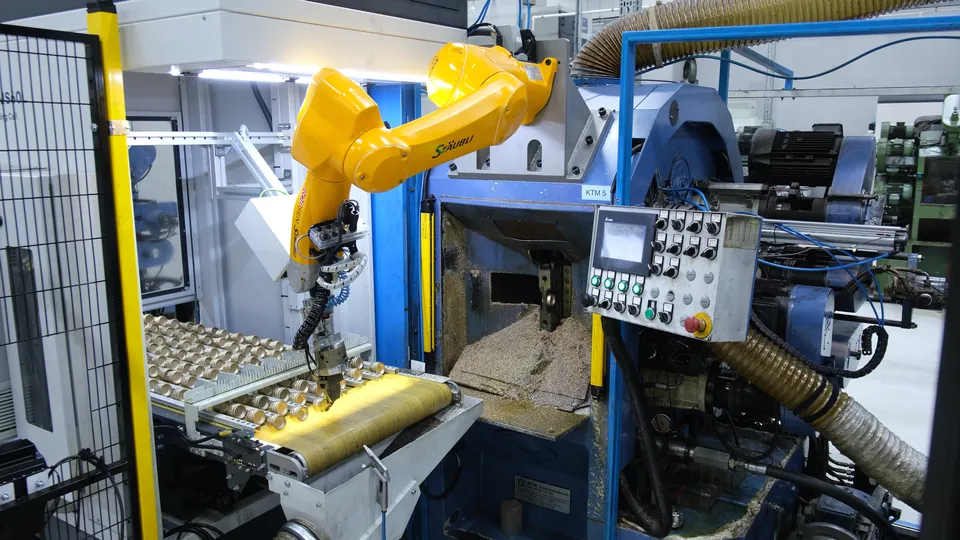
- 01Find and pickIROVISION locates each part on the backlit conveyor in about 83 ms. The robot picks it, no fixture needed.
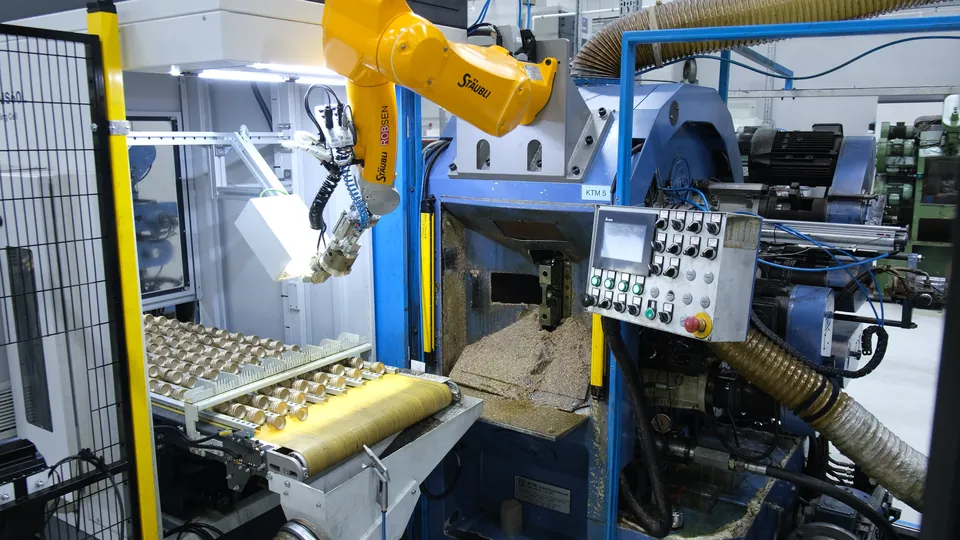
- 02Check at the second cameraThe robot holds the part in front of a second camera, which checks it in the gripper before loading.
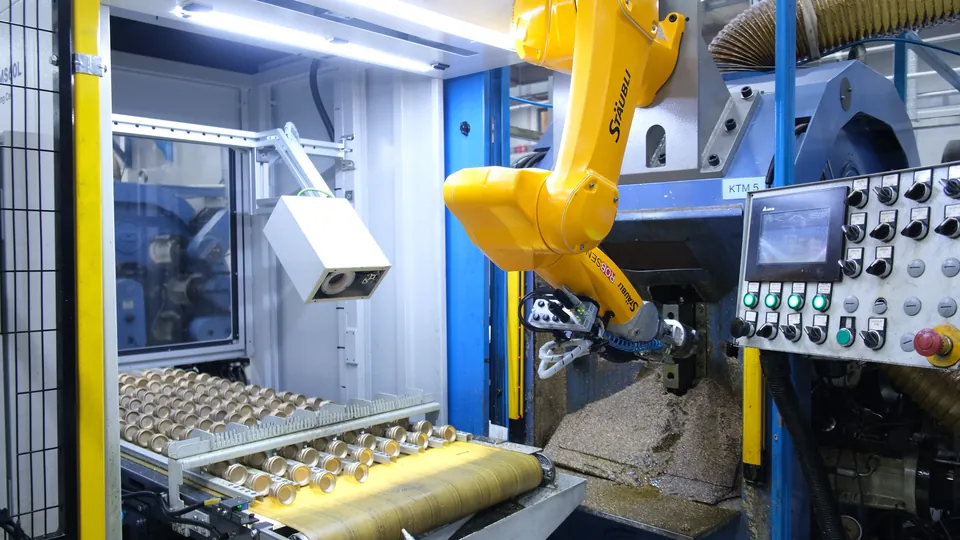
- 03Load the transfer machineThe part goes straight into the machine fixture, and the robot is back over the conveyor for the next one.
One single platform
Built, crated and shipped as one piece
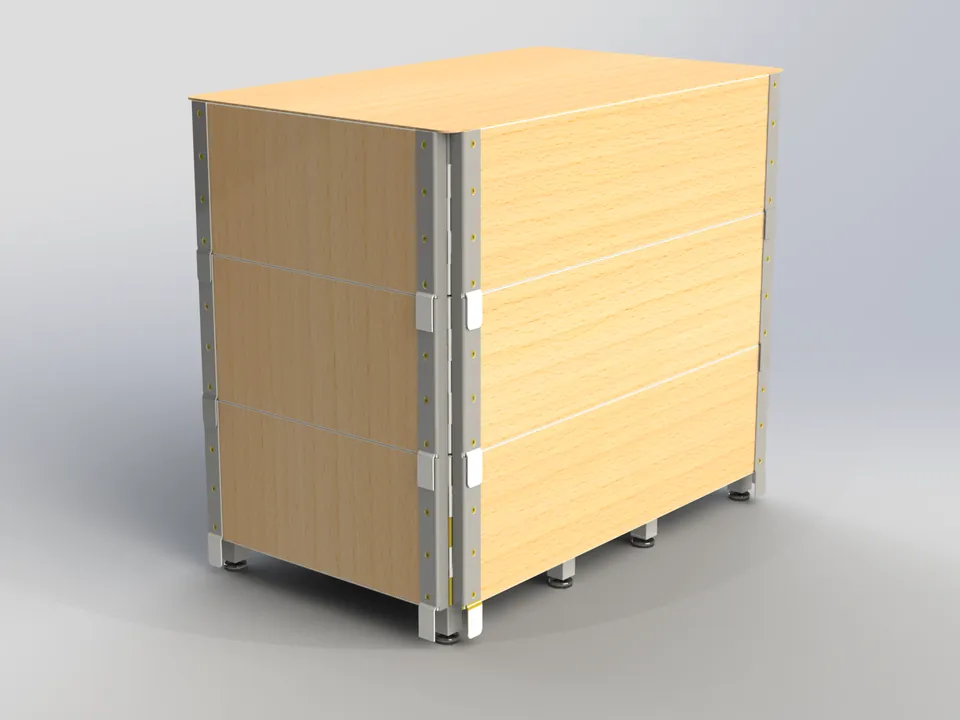
Specialized cells are built on the same platform: finished and tested at Robsen, shipped in one crate, running soon after delivery.
Three ways to mount the robot
The robot goes where the cycle needs it
Every IROCUBE cell has one of three robot positions. We choose it for the part, the machine and the cycle time.
Why above the machine
Close to the fixture, out of the operator's way
- Close to the machineThe shortest path to the fixture. A robot on the cell floor that close to the machine would block the operator's service area.
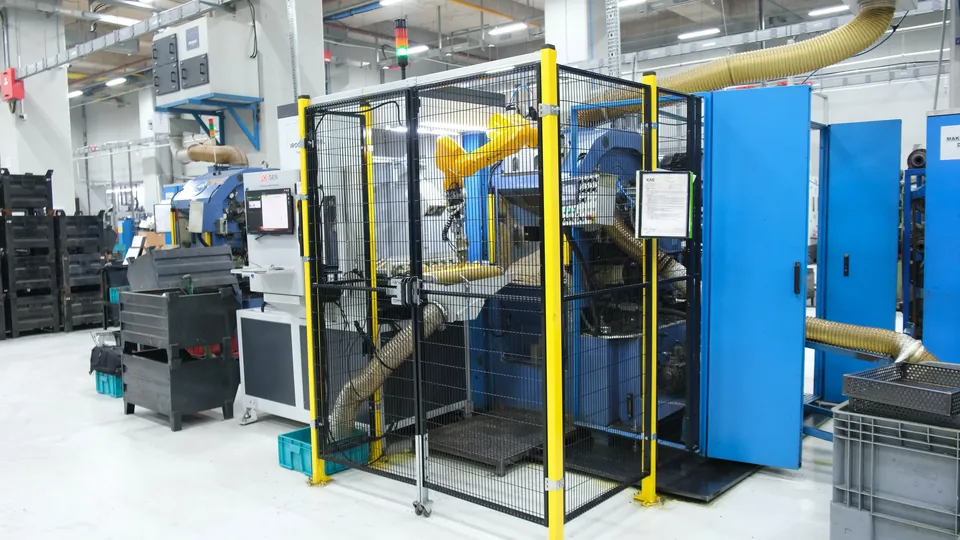
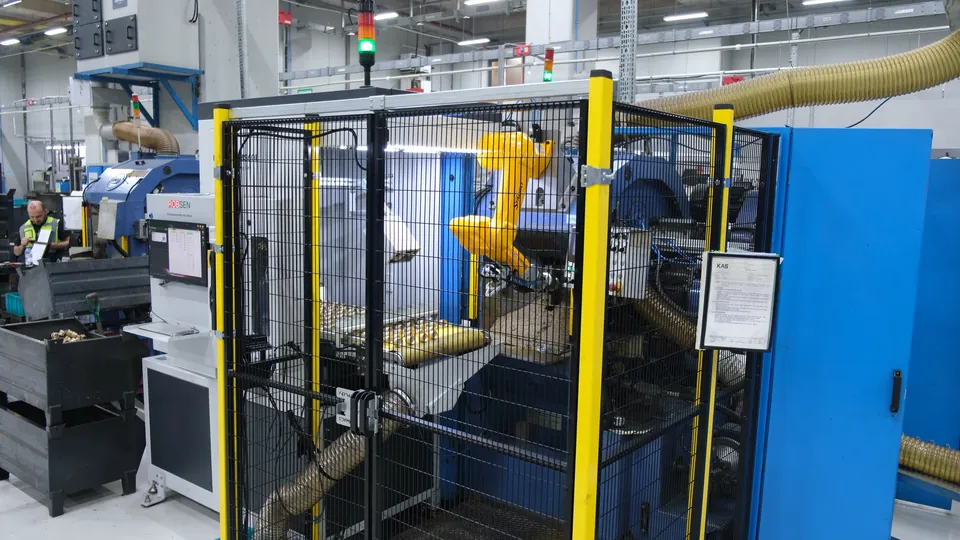
- No long-reach robot neededHanging above the machine, a compact robot reaches both the conveyor and the fixture. For service, it swings aside and leaves the machine front open.
- Built for fast cyclesWe use this layout when the cycle is short. At KAS Group the cell runs at 4.22 seconds per part.
Videos
See it run
In production
The MS60L at work
Photos from the KAS Group plant. Select a photo to enlarge it.
Beyond the standard models
Your parts don't fit a standard cell?
Heavier parts, a longer reach, two machines with one robot, or extra process steps: we build IROCUBE cells to order on the same platform. Larger robots, such as a 25 kg M25, are a project, not a problem.
- Heavier partsRobots with higher payloads, sized to your part and gripper.
- Longer reachLarger machines, larger chucks, longer conveyors.
- More machinesOne robot tending two machines, or dual-robot lines.
- More process stepsWashing, deburring, measuring, leak testing, marking.